
![[HERO] Celebrating Diversity: Success Stories from Women- and Minority-Owned Businesses on Main Street](https://cdn.marblism.com/OoT4EMueSWg.webp)
The Numbers Don't Lie, And They're Impressive
Here's a headline worth reading twice: Black women-owned businesses have surged by 70% since before the COVID pandemic. Even more striking? They now represent 42% of all net new women-owned businesses, despite comprising only 14% of the female population.
That's not a typo. That's a movement.
Welcome to Day 4 of our Innovation on Main Street series. Today, we're turning the spotlight where it belongs, on the resilient, resourceful, and remarkably creative women- and minority-owned businesses transforming communities across America. These aren't just success stories. They're proof that when the right entrepreneur meets the right opportunity (and sometimes, the right funding partner), incredible things happen.
So grab your coffee. Let's meet some Main Street heroes.
When Healthcare Meets Heart: Dr. Mona McBride's Mission
Have you ever driven 30 miles just to pick up a prescription?
For residents of Hamburg, Arkansas, that used to be reality. Then Dr. Mona McBride showed up.
In 2023, Dr. McBride opened CAREFirst Pharmacy & Wellness Center, filling a critical gap in her rural community. But here's what makes this story special: she didn't build it for the profit margins. She built it to honor her late mother's legacy as a community leader.
"Service first" isn't just a slogan for Dr. McBride, it's a business model. Her pharmacy offers not just prescriptions but wellness consultations, health education, and that increasingly rare commodity: someone who actually knows your name.

The takeaway? Sometimes the most profitable business is the one that solves a problem nobody else wanted to tackle. Rural healthcare, childcare, specialized services, these "unsexy" sectors often have the least competition and the most grateful customers.
Lights, Camera, Persistence: Dreka Shevon's Two-Decade Journey
What do you do when your dream industry has almost no one who looks like you?
If you're Dreka Shevon, you build your own door.
Back in 2003, when the phrase "diversity in film" was barely a conversation, Shevon launched Prime Stone Media & Consulting in Jackson, Mississippi. She did it while working full time. She did it with limited resources. And she did it despite seeing few Black women in her industry during her entire childhood.
Twenty-plus years later? Her business specializes in film production, commercials, and consulting. She didn't just make it, she made a path for others to follow.
Here's the lesson for every entrepreneur facing "impossible" odds: The best time to start was yesterday. The second-best time is now. Your industry might not be ready for you, but that doesn't mean you're not ready for it.
Filling the Gaps Nobody Noticed: Ariel Young and Copper & Brass Paper Goods
When was the last time you saw wrapping paper that actually represented you?
For Ariel Young, the answer was "never", so she created it herself.
In 2017, she founded Copper & Brass Paper Goods to address something most people never think about: the stunning lack of diversity in the paper goods industry. Her breakout product? Black Santa gift wrap. (Yes, it sold like crazy.)
Today, her line includes custom notebooks, pens, pouches, and office supplies featuring Black imagery. What started as frustration became a thriving business serving customers who'd been overlooked for generations.
The entrepreneurial insight here is golden: Sometimes the biggest opportunities hide in plain sight. The products and services that don't exist for your community? That's not a problem, that's your business plan.
The Funding Reality Check
Let's talk about the elephant in the room: money.
Every success story we've shared today required capital. Equipment. Inventory. Marketing. Rent deposits. Insurance. The list goes on.
And here's where it gets complicated for women- and minority-owned businesses. Studies consistently show that diverse entrepreneurs face additional hurdles accessing traditional financing. Lower approval rates. Higher interest rates. More hoops to jump through.
But here's the good news: alternative funding has never been more accessible.
Consider your options:
- Equipment financing – Get the tools you need without draining your cash reserves. Many programs offer 100% funding with flexible terms.
- Working capital loans – Bridge the gap between expenses and revenue, especially during seasonal fluctuations or growth spurts.
- SBA and USDA programs – Government-backed options often have favorable terms for underrepresented entrepreneurs.
- Business credit cards with introductory rates – Some even offer rates as low as 0% to get you started.
- Materials/Contract financing – Perfect for contractors that need inventory before they can go to work.
The key? Finding a funding partner who actually understands small business, not just the algorithm, but the ambition behind it.
Community Impact: The Ripple Effect
What happens when diverse entrepreneurs succeed?
The impact goes way beyond one business owner's bank account.
Take The Lit. Bar in the Bronx. When Noëlle Santos opened this bookstore through crowdfunding and community engagement, she didn't just create a business, she brought reading opportunities to an underserved borough. Every book sold, every reading event hosted, every kid who discovers a love of literature? That's the ripple effect.
Or consider Aya Paper Co., founded by SaVonne Anderson in Newark, New Jersey. Her eco-friendly cards and journals aren't just products, they're a commitment to sustainability AND representation. Double impact.
And then there's Shea Radiance, founded by Funlayo Alabi. After initially struggling to meet demand when landing major retailer shelves (a good problem to have, but still a problem), she weathered the setback, returned stronger, and now actively lifts up other entrepreneurs through her platform.
Here's what these stories share: Diverse entrepreneurs don't just build businesses. They build communities. They create jobs in neighborhoods that need them. They model possibility for the next generation. They fill gaps that bigger companies can't, or won't.
Your Turn: What's Your Success Story Going to Be?
Ready to write your own headline?
Whether you're a first-generation entrepreneur with a game-changing idea, a seasoned business owner ready to scale, or someone who's been told "no" a few too many times: there's a path forward.
The entrepreneurs in today's stories didn't have perfect circumstances. They had vision, grit, and the right support at the right time.
Here's how to start:
- Identify your gap – What's missing in your community or industry that you could provide?
- Get your finances in order – Know your numbers before you need them.
- Explore all funding options – Don't limit yourself to traditional banks.
- Build community – Your network is your net worth.
- Start before you're ready – Perfect conditions don't exist.
Let's Build Your Success Story Together
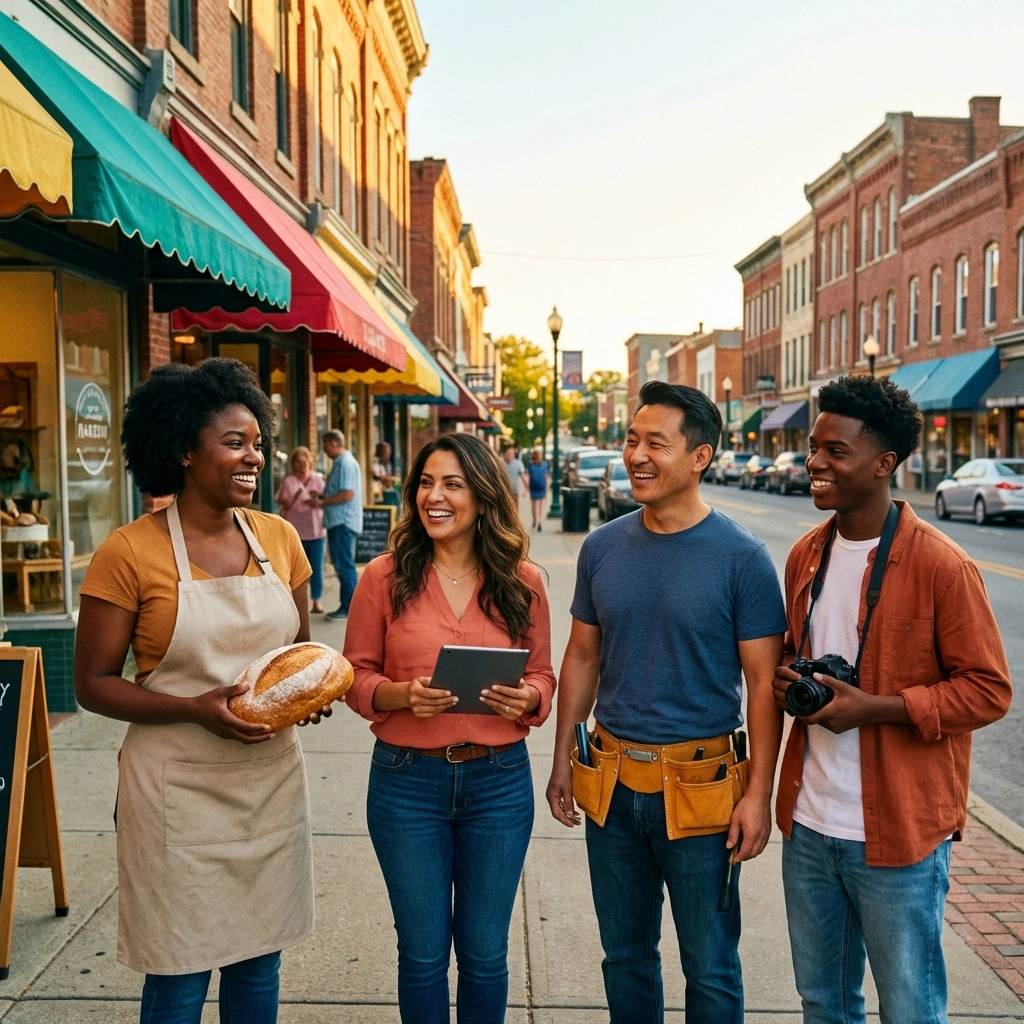
The entrepreneurs featured today prove something important: with the right combination of vision, resilience, and funding, extraordinary things happen on Main Street.
If you're ready to take the next step: whether that's equipment financing, working capital, SBA options, or just a conversation about what's possible: we're here.